


It's Topic Tuesday!
Hello everyone! I hope you are doing well.
My name is Alvaro, and today we’ll discuss one of the most dangerous cardiovascular emergencies: Acute Type A Aortic Dissection.
A Type A aortic dissection occurs when a tear develops in the ascending aorta, allowing blood to enter the wall of the vessel and split its layers apart. This creates a true lumen (the normal pathway) and a false lumen (the new abnormal channel inside the wall of the aorta).
This is a disease that can affect otherwise functional people suddenly and without warning. Patients often describe the pain as:
“The worst pain of my life.”
Understanding why this happens, who is at risk, and how surgeons classify these dissections is essential to recognizing and treating this silent killer early.
What is a Type A aortic dissection ?
A simple way to understand an acute Type A aortic dissection is to imagine the ascending aorta like a thick high-pressure fire hose connected directly to the heart. If the inner layer of the hose suddenly tears, blood can force itself between the layers of the wall and begin splitting them apart under pressure. As the dissection extends, the normal channel for blood flow becomes compressed by the false lumen, making it harder for blood to reach critical structures.
In Type A dissections, this becomes especially dangerous because the coronary arteries originate directly from the ascending aorta. These arteries are responsible for supplying oxygen and blood to the heart muscle itself. When the dissection flap extends near the coronary arteries, it can partially or completely block blood flow into them, a complication known as coronary malperfusion. As a result, the heart muscle suddenly becomes ischemic, meaning it is not receiving enough oxygen. Patients may then develop chest pain, arrhythmias, heart failure, cardiogenic shock, or even cardiac arrest.
⚠️ Who Is at Risk?
Many patients have underlying risk factors long before the dissection occurs.
🚬 Common Risk Factors
Chronic hypertension (most common)
Smoking
Atherosclerosis
Older age
Male sex
Hypertension is especially important because years of elevated pressure progressively damage the aortic wall.
🧬 Genetic & Connective Tissue Disorders
Some younger patients develop dissections because of inherited disorders affecting connective tissue.
Marfan syndrome
Loeys–Dietz syndrome
Ehlers–Danlos syndrome
These disorders weaken the structural integrity of the aorta, making it more susceptible to dilation and tearing.
🫀 Other Important Causes
Additional causes include:
Bicuspid aortic valve
Prior cardiac surgery
Cocaine or stimulant use
Inflammatory aortitis
Trauma
🧠 Understanding the DeBakey Classification of Aortic Dissection
When doctors diagnose an aortic dissection, one of the first things they determine is where the tear begins and how far it spreads inside the aorta.
To describe this clearly, specialists use something called the DeBakey classification system or the Stanford system.
Today we are going to go deep on the DeBakey classification, established by pioneering surgeon Michael DeBakey, remains a cornerstone in clinical practice for detailing the anatomical extent of aortic dissections. By categorizing dissections based on their point of origin and the path they travel, this system helps physicians describe:
Where the dissection begins (the site of the primary intimal tear)
How far it travels through the aorta (the distal propagation of the false lumen)
Understanding the specific Type (I, II, or III) is essential because it directly influences:
The urgency of treatment: Type I and II (proximal dissections) typically require emergent surgical intervention.
Surgical planning: Determining whether to replace the ascending aorta, aortic root, or arch.
Long-term follow-up and monitoring: Guiding the surveillance of distal aortic segments in chronic cases.
Classification | Origin of Dissection | Extent of Dissection | Stanford Equivalent | Typical Management |
🔴 DeBakey Type I | Ascending aorta | Extends into arch and descending/abdominal aorta | Stanford Type A | Usually emergency surgery |
🟠 DeBakey Type II | Ascending aorta | Confined to ascending aorta | Stanford Type A | Usually emergency surgery |
🔵 DeBakey Type IIIa | Descending thoracic aorta | Limited to thoracic aorta | Stanford Type B | Often medical management initially |
🔵 DeBakey Type IIIb | Descending thoracic aorta | Extends below diaphragm into abdominal aorta | Stanford Type B | Medical therapy, TEVAR, or surgery depending on complications |

⚠️ Why Is Type A Dangerous?
A Type A dissection involves the ascending aorta, which is the portion closest to the heart.
This area is critical because it supplies blood to:
The heart itself
The brain
The rest of the body
If the dissection worsens, it can quickly lead to:
Heart failure
Stroke
Cardiac tamponade
Sudden death

🚨 Initial Medical Management
Before a patient with an acute Type A aortic dissection goes to surgery, the first priority is to immediately reduce the amount of stress being placed on the weakened aortic wall. Every heartbeat and every increase in blood pressure creates additional force against the dissection, increasing the risk of extension or rupture.
For this reason, early medical management focuses on:
Reducing heart rate
Lowering blood pressure
Controlling pain and sympathetic stimulation
Pain itself can worsen the situation because it triggers the release of stress hormones that elevate blood pressure and heart rate even further.
🛠️ Definitive Treatment: Emergency Surgery
Unlike many Type B dissections, an acute Type A aortic dissection is generally considered a surgical emergency because of the extremely high risk of catastrophic complications.
The operation performed depends on how far the dissection extends and which structures are involved. Surgeons may need to:
Replace the ascending aorta
Replace the aortic root
Repair or replace the aortic valve
Reconstruct part of the aortic arch
The main objectives of surgery are to:
Prevent rupture
Restore normal blood flow
Eliminate the most dangerous portion of the dissection
Save the patient’s life
These operations are complex and require rapid coordination between emergency physicians, cardiologists, anesthesiologists, intensivists, and cardiothoracic surgeons.
🧠 Key Takeaway
Acute Type A aortic dissection is one of the most rapidly progressive and life-threatening emergencies in cardiovascular medicine. Early recognition is essential because patients can deteriorate within minutes to hours.
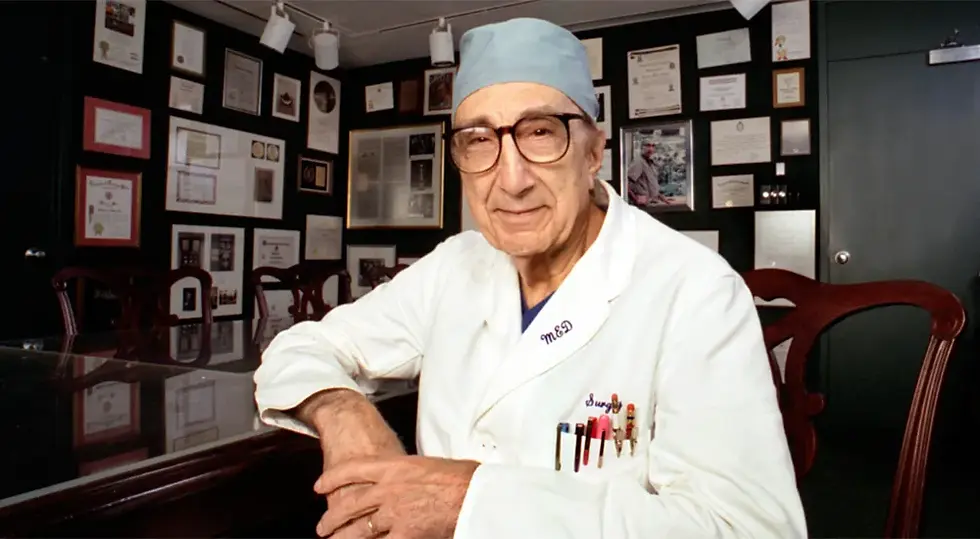
Today I’ll introduce a new segment about the key surgeons who shape aortic surgery and the first surgeon I want to introduce is Michael DeBakey who was one of the most influential cardiovascular surgeons in history and a true pioneer of modern aortic surgery. His work transformed how surgeons approached diseases of the aorta, and because of his enormous contributions, one of the major classification systems for aortic dissection now carries his name: the DeBakey classification.
This is all we have for you today folks. We hope this has been informative. Join us back here next Tuesday
ATT
ALVARO JOSE MARTINEZ SANTACRUZ
Bibliography
Dieter, R. S., Dieter, R. A., Jr, & Raymond A. Dieter, I. I. I. (Eds.). (2019). Diseases of the aorta. Springer International Publishing.
White, A., Bozso, S. J., Ouzounian, M., Chu, M. W. A., Moon, M. C., & Canadian Thoracic Aortic Collaborative. (2021). Acute type A aortic dissection and the consequences of a patent false lumen. JTCVS Techniques, 9, 1–8. https://doi.org/10.1016/j.xjtc.2021.05.002
Aortic dissection. (n.d.). Pulsenotes. Retrieved May 18, 2026, from https://app.pulsenotes.com/surgery/vascular/notes/aortic-dissection


Comments